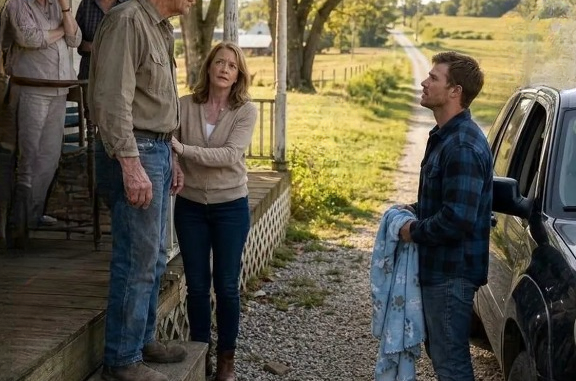
Michael first heard the crying near the edge of a rented field as evening rain began to fall over the crops. At first, he assumed it was an animal trapped in the grass, but when the sound came again, he set down his tools and followed it. In a ditch wrapped in a worn blue blanket, he found a newborn baby—cold, frightened, and alone. Michael was a struggling farmer with barely enough to cover his own expenses, and for a brief moment he thought about the hardship ahead. But when the baby cried again, he lifted him out of the mud. “You’re not alone anymore,” he whispered. At the hospital, he explained honestly that he had found the child, but when the baby calmed in his arms and cried again only when he was taken away, Michael already knew he couldn’t leave him behind.
News spread quickly through the small town. People whispered that Michael couldn’t even take care of himself, let alone a child, and that the baby should be placed with a wealthier family. Even his sister Sarah insisted he was making a mistake. Michael ignored the criticism, held the baby close, and named him Noah, believing the name suited someone who would face difficult storms in life. Raising him was a constant struggle—he sacrificed meals, mended his own worn belongings so Noah could have what he needed, and worked tirelessly to provide. Through it all, Noah grew up knowing he had been abandoned once but chosen again. Michael never let him feel like a burden; instead, he taught him that love is shown through staying.
As the years passed, Noah grew into a determined young man, though Sarah never stopped telling Michael he had wasted his life. When Noah turned eighteen and left home, Michael gave him his last bit of money at the bus station, saying a father should always send his son off with something in his hands. Noah stayed in touch over the years, calling when he could and sending help whenever he was able, even as he and Michael occasionally argued through distance and pride. Time went on—Michael aged, the house weakened, and Sarah continued to insist Noah would never return. Twenty-five years after that rainy night, she stood on the porch repeating the same old judgment when a black SUV pulled into the driveway.
Noah stepped out holding the faded blue blanket from the day Michael had found him. Sarah fell silent. Then Noah revealed legal documents confirming what Michael had always known in his heart—he was, in every sense, his father. But Noah’s surprise didn’t end there. He had also paid off the house, cleared Michael’s debts, and arranged repairs so he could live his remaining years in comfort. When Michael tried to protest, Noah smiled through tears and repeated the lesson he had learned growing up: that a son has the right to care for his father in return. In that moment, it became clear to everyone that Michael hadn’t wasted his life at all—he had built a bond strong enough to come full circle.
Leave a Reply