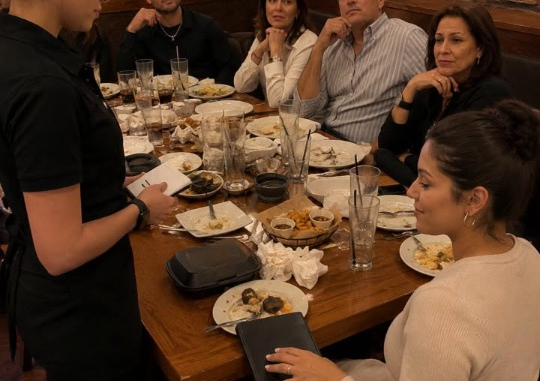
The instant the waiter placed the check in the middle of the table, I finally understood the real reason behind my family’s invitation.
My father calmly pushed the leather folder toward me and gave me a knowing smile, as if everything had already been arranged.
“You can handle this, right, Elena?” he said.
The conversation stopped.
Sixteen relatives looked directly at me. Nobody seemed confused or surprised. They were simply waiting for me to take out my wallet.
The upscale restaurant overlooking the Chicago River had been full of cheerful conversations, expensive seafood, perfectly cooked steaks, elaborate desserts, and costly bottles of wine. But in that moment, the warmth disappeared.
This wasn’t a reunion.
It was a setup.
After three years of being apart, they had brought me back expecting me to silently pay a bill that was more than $4,300.
Looking around the table, I realized the truth: they didn’t invite me because they missed me. They invited me because they still saw me as the person they could easily use.
The reason I had walked away years before was much deeper than a family disagreement.
When my grandmother passed away, she left me her lakeside cottage and an investment account. Several family members immediately pressured me to give everything to them, claiming it was what was best for the family.
I refused.
Instead of respecting my grandmother’s wishes, they called me selfish and accused me of being ungrateful. Not once did they acknowledge that those gifts had been my grandmother’s choice.
For years afterward, they sent messages blaming me for the distance between us, never admitting that their own actions were what caused the separation.
Then, out of nowhere, my mother reached out and invited me to dinner. She told me it would just be my parents and me—a chance for us to talk and reconnect.
But when I arrived and saw the entire extended family sitting there, I immediately knew I had been deceived.
Throughout the evening, they talked about forgiveness, rebuilding relationships, and the importance of family. Yet at the same time, they ordered the most expensive dishes on the menu, clearly assuming someone else would take care of the bill.
When the check finally arrived, I didn’t argue.
I simply smiled and asked to speak with the waiter.
A few minutes later, the restaurant manager came over and explained something important: the reservation for the private dining room had been made under my father’s name, meaning he was responsible for the final payment according to the restaurant’s policy.
My father quickly insisted that I should still pay.
I calmly explained that I hadn’t planned the dinner, chosen the menu, invited the guests, or agreed to cover the cost.
My refusal shocked everyone.
They told me I could afford it. They reminded me of my financial situation.
But I reminded them of something else.
Not one of them had called me on my birthday.
Not one of them checked on me after my surgery.
Not one of them stood beside me when I was going through difficult moments.
Yet somehow, every single one of them had managed to attend an expensive dinner they expected me to fund.
For the first time in years, I looked at my family without guilt or fear.
And I simply said, “No.”
As the arguments grew louder, I picked up my purse and walked away.
I didn’t look back.
Later that night, my phone filled with angry messages accusing me of humiliating the family. But none of those messages included an apology or any acknowledgment of what they had done.
A few days later, my father showed up at my office, upset that others had heard about the dinner. Even then, his main concern was protecting his reputation—not repairing our relationship.
That was when I finally accepted that nothing had changed.
No one was willing to admit they were wrong.
So I stopped seeking their approval and chose peace instead.
I kept my grandmother’s cottage, the place where I could sit beside the lake and remember the one person who loved me without conditions or expectations.
In the end, my grandmother’s greatest gift wasn’t the property or the money.
It was the strength she gave me to create boundaries, leave behind unhealthy relationships, and understand that true family isn’t defined by obligation.
It is built through love, respect, and honesty.
Leave a Reply