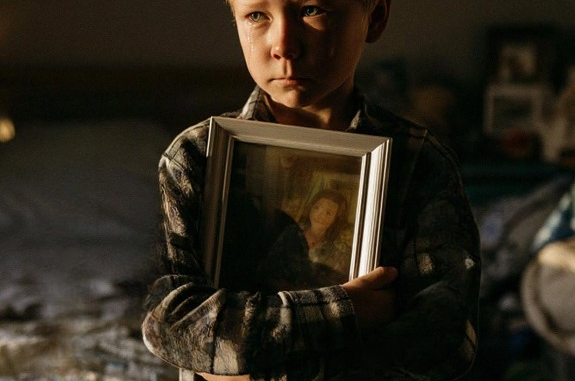
My mother made me a quilt shortly before she passed away, and it became the one thing I held onto every night. Then, one day, I came home and realized it was gone. When my stepmother calmly told me she had thrown it out, she had no idea she had gotten rid of something that meant far more than a simple blanket.
Advertisement
My mother died on a Tuesday in March, four years before the events I’m about to describe.
I was ten years old.
I remember the exact day because certain details stay with you when the loss itself feels impossible to understand. Tuesday. March. The cold air outside the hospital entrance. The way my father held my hand so tightly that I could feel how scared he was, even though he never said a word.
Her name was Laura.
She loved gardening, classic films, and creating things with her hands. She sewed, crocheted, painted small decorations, and spent countless weekends turning ordinary materials into things that made our house feel like home.
Quilting had always been one of her favorite things.
There were several quilts throughout our house, each one unique. Every fabric choice had a reason behind it, every pattern carefully planned.
The quilt she made for me was the final one she completed before her illness became too severe.
I was there the day she finished it.
She had spent weeks working on it during the time when she still had enough energy to sit at the kitchen table, even though she tired much faster than before.
It was mostly blue and green, with small patches of yellow woven throughout. Some pieces came from things I recognized — a piece of my old favorite shirt, fabric from one of her summer dresses, little pieces of memories stitched together.
“This one belongs to you,” she told me as she placed it over my bed. “So you’ll always have it.”
“It’s beautiful, Mom,” I said.
She smiled. “It better be. I spent enough time making it.”
Six weeks later, she was gone.
After that, the quilt became the closest thing I had to her.
Every night, I slept underneath it.
No matter where we went, it came with me.
When we visited my grandparents, the quilt came along.
When I had to spend nights in the hospital for small procedures, my father brought it.
He never questioned why I needed it. I think he understood something neither of us ever had to explain — it wasn’t just fabric. It was a piece of my mother that I could still hold.
My stepmother, however, never saw it that way.
Her name was Rachel.
She had been part of our family for almost two years when this happened.
She and my father met through friends, dated for several months, and eventually got married. The truth was, she wasn’t a terrible person.
She was responsible. She kept the house organized. She tried to take care of things.
But she didn’t understand the invisible parts of raising a child who was still grieving.
Especially one who kept his late mother’s quilt on his bed.
The comments started small.
At first, they were almost harmless.
“That blanket is looking pretty old,” she said one day after washing it and placing it back on my bed. “The edges are starting to come apart.”
“I know,” I replied. “But it’s okay.”
“I could buy you a new one,” she offered. “Something softer and warmer.”
“I don’t want a new one.”
“It’s just a blanket, Ethan,” she said. “Your mom wouldn’t want you holding onto something that’s falling apart.”
“Maybe,” I said. “But she made this one.”
Rachel crossed her arms.
“You can still remember her without sleeping with the same quilt every night.”
“Maybe you could,” I answered quietly. “I can’t.”
She stared at me for a moment but didn’t continue arguing.
I tried to be respectful because my father had asked me to give her a chance.
Another time, she came into my room while I was studying.
She looked at the quilt folded on my bed.
“You know it’s okay to let things go sometimes,” she said. “Keeping old things doesn’t always help you heal.”
I looked at her, then back at my homework.
“Thanks,” I said, because it was the only response I could think of.
My father knew there was tension between us, but he didn’t know how to fix it.
He told me once that Rachel was trying her best and still learning how to fit into our family.
I nodded and told him I understood.
I didn’t completely.
But I wanted to.
The quilt stayed where it belonged.
On my bed.
I thought that was something everyone accepted.
Advertisement
Then one Wednesday afternoon in November, I came home from school and immediately felt that something was different.
I couldn’t explain it.
I walked upstairs, dropped my backpack, and turned toward my bed.
The quilt was missing.
For a few seconds, I just stood there.
I searched the room.
I checked the hallway.
I looked in the laundry room.
The closet.
The guest room.
Nothing.
Finally, I went downstairs.
Rachel was in the kitchen putting away dishes. When she saw my face, she looked like she already knew why I was upset.
“Have you seen my quilt?” I asked.
She barely reacted.
“Oh, that old thing?” she said.
“I threw it away.”
Everything inside me stopped.
“You threw it away?”
“It was damaged,” she explained. “The stitching was coming loose, and there was a tear. I was planning to replace it anyway. There’s a new blanket upstairs.”
“You knew that was my mother’s quilt.”
“Yes, I know.”
“She made that for me before she died,” I said. “That was the last thing she ever gave me.”
Rachel sighed.
“I understand it was important to you, but it was falling apart. At some point, you have to move forward.”
“Where did you throw it?”
“The garbage truck already came this morning.”
My stomach dropped.
I couldn’t believe it.
I couldn’t believe she had done something like that.
I don’t remember walking to my father’s office.
I only remember opening the door and seeing him look up.
“What happened?” he asked.
“Rachel threw away Mom’s quilt.”
He stood immediately.
“She did what?”
“She said it was old and damaged. The trash is already gone.”
I started crying.
“Dad… Mom put something inside it.”
He froze.
“What do you mean?”
“She hid letters inside the quilt.”
I could barely get the words out.
“Before she died, she told me she put messages there for me. For when I got older. For birthdays. For important moments. She said when I missed her, I could find her in those letters.”
My father slowly sat down.
“She told you this?”
“Before she went back to the hospital,” I said. “She made me promise not to tell anyone because it was something just between us. I wasn’t ready to open them yet.”
I swallowed hard.
“I was saving them.”
My father covered his face with his hands.
After a moment, he looked up.
“When did the garbage truck come?”
“This morning.”
He grabbed his phone.
“Get your jacket. We’re going.”
I won’t pretend the next part was some dramatic movie scene.
It was just my father and me spending hours searching through a waste facility, covered in dirt, exhausted, and hoping we weren’t too late.
But it was also one of the clearest examples of love I have ever experienced.
My father contacted the waste company, explained everything, and eventually convinced a supervisor to let us search through the area where our neighborhood’s trash had been taken.
We put on gloves and old clothes and searched carefully.
Every few minutes, my father looked at me.
“You okay?”
I nodded.
Neither of us believed it.
At one point, he smiled sadly.
“Your mother would probably laugh at us right now.”
“She’d probably tell us exactly where she hid it,” I said.
He smiled.
Then we kept searching.
We found it after nearly two hours.
At the bottom of a large pile of trash bags.
The blue, green, and yellow fabric was still visible despite the dirt.
My father picked it up slowly.
He held it like it was something fragile.
“Found it,” he whispered.
I smiled.
We brought it home and carefully opened the seam along the bottom edge.
Inside was a hidden pocket.
And inside that pocket were envelopes.
Fifteen of them.
Each one written in my mother’s handwriting.
“For your 13th birthday.”
“For when you graduate.”
“For when you fall in love.”
“For when your heart gets broken.”
“For when you need me.”
Some were ruined.
Seven were damaged beyond saving.
But eight survived.
My father stared at the lost letters.
“I’m sorry,” he said.
“We still have eight,” I replied.
“We should have had all fifteen.”
“I know,” I said. “But we have eight.”
That night, my father talked with Rachel.
I wasn’t there.
I never asked what was said.
The next morning, she came to my room.
“I didn’t know about the letters,” she said quietly.
“I know.”
“I thought I was helping you,” she continued. “I convinced myself it was just an old blanket.”
She looked down.
“But it wasn’t just a blanket.”
“No,” I said.
She nodded.
“I should have asked before touching it.”
“Yes,” I replied.
“I’m sorry, Ethan.”
I believed she meant it.
I wasn’t ready to forgive her completely.
But something had changed.
And maybe someday I would.
That evening, I opened the first surviving letter.
It was the one that said:
“For when you need me.”
My mother’s handwriting filled three pages.
She told me she loved me.
She told me she believed in me.
She explained why she made the quilt and why she hid the letters.
She wanted to be there for the moments she knew she would miss.
At the bottom, she wrote:
“You will never truly be alone. Wherever you are, whatever year it is, whatever happens, I will always be part of the things that make you feel at home.”
My father read it beside me.
After a long silence, he whispered:
“She was incredible.”
“Yeah,” I said.
“She was.”
The letters went into a wooden box my father bought for them.
The quilt went back onto my bed.
The edges were still worn.
The fabric was still imperfect.
But that was part of what made it special.
That night, lying beneath it, I thought about my mother sitting at the kitchen table, carefully sewing every piece together.
“For keeping,” she had said.
She meant much more than I ever realized.
Leave a Reply