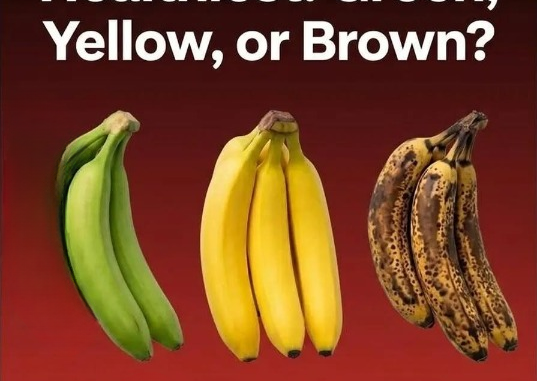
Bananas are among the most widely enjoyed fruits in the world, thanks to their affordability, natural sweetness, convenience, and nutritional value. They can be eaten on their own, blended into smoothies, added to breakfast dishes, or used in a variety of baked goods. However, many people are unaware that a banana’s taste, texture, and nutritional characteristics change significantly as it ripens. From green and firm to yellow and sweet, and eventually brown-spotted and soft, each stage offers distinct advantages. Knowing these differences can help you choose the right banana for your needs while reducing food waste.
The ripening process begins soon after bananas are harvested. As they mature, enzymes gradually break down starches and convert them into natural sugars. Green bananas contain more starch, making them firmer and less sweet. Their mild flavor and dense texture make them a popular ingredient in cooked and savory dishes in many cultures. As the fruit ripens and turns yellow, it develops the sweetness most people associate with bananas. Yellow bananas offer a balance of flavor and texture, making them ideal for snacks, smoothies, fruit salads, and breakfast recipes.
When brown spots begin to appear, many people assume the fruit has gone bad. In reality, spotted bananas are simply riper. At this stage, much of the starch has been transformed into sugar, resulting in a sweeter taste and softer consistency. These bananas are often preferred for baking because their natural sweetness can reduce the need for additional sugar. They are also excellent for blending into smoothies or mixing into oatmeal, yogurt, and desserts. Rather than discarding them, brown-spotted bananas can be put to good use in a variety of recipes, helping to minimize food waste.
Regardless of their ripeness, bananas remain a healthy and nutrient-rich fruit. They provide potassium, vitamin B6, vitamin C, and dietary fiber, all of which contribute to a balanced diet. The ideal banana depends largely on individual taste and intended use. Green bananas are best for those who prefer a firmer texture, yellow bananas offer the classic balance of sweetness and convenience, and brown-spotted bananas shine in cooking and baking applications. By understanding and appreciating each stage of ripeness, you can get the most out of every banana while discovering new ways to enjoy this versatile fruit.
Leave a Reply