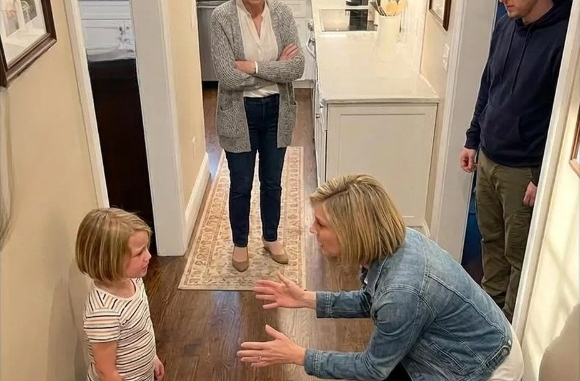
The call came while I was folding laundry that carried the scent of cheap detergent and too many do-overs. It’s strange what details linger when everything shifts—the inside-out sock, a faint stain, the quiet rhythm of an ordinary afternoon. Then my phone buzzed, and everything changed. Lily’s voice was barely audible, soft and cautious, like a child afraid of being overheard. She said she was locked in the bathroom at her grandmother’s house. She told me not to be upset. Then she admitted her hands had been burned for taking a piece of bread.
I didn’t hesitate. I grabbed my keys, called emergency services, and drove with a focus only fear can bring. When I arrived, the house looked the same as always—neat, calm, hiding the truth. Her grandmother answered the door as if nothing was wrong. Inside, I found Lily curled up near the bathroom, her small hands raised and shaking. The burns were undeniable. When I asked who had done it, she whispered the answer. What made it worse was the absence of denial—only a calm explanation about discipline, about teaching lessons, about control. Even Evan hesitated, downplaying what was clearly in front of us. In that moment, I realized silence can be just as harmful as cruelty.
At the hospital, the reality was documented in reports and records. The injuries weren’t accidental. Lily repeated her story consistently, steady despite her fear. That night, she cried over a piece of bread, apologizing for something that was never wrong. I told her she had nothing to apologize for—that no one has the right to punish someone for being hungry. The next day, I took action. Legal steps were initiated, and the truth held firm despite attempts to distort it. In court, calm justifications couldn’t outweigh the harm. Protection came swiftly, and the version of reality built on denial began to collapse.
Healing, however, came quietly. It showed up in small, delicate moments—when she allowed someone to care for her hands, when she stopped asking for permission to eat, when laughter returned freely. Bread was the hardest part. At first, it brought fear, so we slowly redefined what it meant together. Months later, we baked side by side. She hesitated near the oven, and I showed her what safety feels like—that warmth doesn’t have to hurt. When she asked for the first piece, I said yes. A year later, she stood in the kitchen, sunlight surrounding her, reaching without fear. The scars remained, but they no longer defined her. She had learned something simple yet powerful: safety is a right, and kindness is stronger than pain.
Leave a Reply