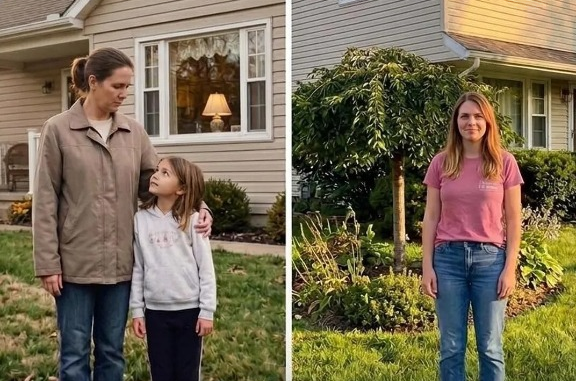
When the lawyer read my stepmother Sarah’s will, the room went completely silent in disbelief. She had left the house and her savings to me, while my three siblings were only given a symbolic amount. Their shock quickly turned into frustration and anger. They said it didn’t make sense—after all, they had been the ones caring for her in her final days, while I had been living my own life in another city. I sat there just as confused as they were. I had never truly felt like I belonged in that home or been fully accepted as her daughter, so her decision surprised me just as much.
But the real story didn’t start in that office—it began years earlier, in small moments I once overlooked. When my father married Sarah, I was young and hopeful, wanting to feel like part of the family. Yet as my siblings were born, a quiet distance slowly formed. They naturally called her “Mom,” while I hesitated, never quite sure where I stood. That uncertainty gradually became a barrier between us. After my father died, the distance only grew. Conversations became colder, and I eventually moved away, accepting that our relationship would never be especially close.
When Sarah passed, I didn’t even know she was ill until it was too late to say goodbye. That absence stayed with me, and the reading of her will only added to the confusion. Back at the house, tensions rose quickly. My siblings questioned whether I had influenced her decision, and their accusations hurt, though I knew arguing wouldn’t bring answers. Instead, I went upstairs to her room, searching for clarity. There, hidden behind her wardrobe, I found a letter addressed to me. My hands shook as I opened it, unsure of what I would read.
In her letter, Sarah finally spoke honestly. She admitted she had allowed a quiet divide to form in our family years ago, choosing to avoid conflict when my siblings questioned my place. She said she deeply regretted that choice and, over time, had come to recognize my independence, strength, and kindness more than she ever had before. The inheritance, she explained, was not meant to divide the family, but to acknowledge what she had never said out loud. Her words didn’t erase the past, but they gave me something I had long been missing—understanding. As I left the house that night, I carried both the weight of everything that had happened and a clearer sense of where I stood.
Leave a Reply