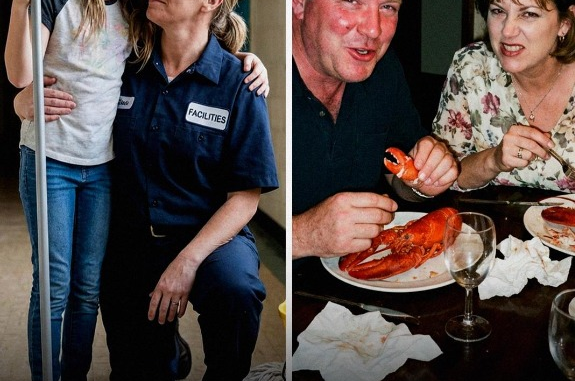
I expected Easter dinner with my in-laws to be just another test of patience, but when their cruel jabs about my janitor job began, my daughter, Audrey, finally spoke up. Her words revealed a strength I didn’t know I had, and it changed everything.
I used to believe family meant unconditional love. After Daniel died, I realized some people only call you family when you have something to give. Three years ago, I became a widow almost overnight. Daniel’s illness was short and brutal, a blur of hospitals, prayers, and then silence.
His parents hugged Audrey and me at the funeral, promising to be there, but after that, they disappeared. No support, no calls when I worked double shifts to put food on the table. Grief was ours alone.
So I survived.
Some nights I returned home with sore feet, blisters from long shifts. Audrey would greet me in the hallway with leftover soup and grilled cheese, carefully set on the table, always saving me the bigger slice. “You always take care of me,” she’d say. And I’d laugh, telling her she does the same for me.
Weeks passed with me cleaning houses, offices, even a dentist’s office where the floor smelled like mint. Audrey would wait at the window with my old umbrella, and we’d keep up our routine: homework, dinner, quizzes, stories. We made it work.
When I finally landed a janitor job at the best school in town, I ran to Audrey waving the contract. “Guess where you’re going to school?” I shouted. Her joy lit up our small victories — better pay, tuition breaks, and a future I’d fought for.
Yet, Daniel’s family still barely called, only checking in at Christmas and Easter. No birthdays, no concern, just judgment.
That Easter, I came straight from a morning shift, nerves tight, slipping into my best blouse, Daniel’s favorite color. Audrey twirled in her new yellow dress. We arrived at Gina and Duncan’s house, all smiles, polished blue hydrangeas, and a room full of relatives ready to judge.
Lunch was stiff with forced conversation. Aunt Margaret bragged about cruises. Gina mocked Audrey’s schoolwork. Duncan sneered at my job. “Still cleaning toilets, Stella?” they asked, implying it made me small. My stomach twisted, but I stayed silent, thinking of Audrey, teaching her to take the high road.
Then Audrey stood, voice firm, eyes blazing. “No. You keep saying Mom cleans toilets like it makes her small, but every late shift kept our lights on. Every hard day gave me what I needed. Mom has character.”
She pulled the scholarship letter from her bag. “I got a full scholarship because I worked hard, and Mom never gave up on me.”
The room went silent. Gina and Duncan could only stare, speechless. Mrs. Sanderson and others praised our effort and grace. Audrey continued, “I’d trade it all for one more day with Dad. He was proud of Mom, no matter what job she did.”
They left in stunned silence, and we walked out together, no longer apologetic.
In the car, Audrey worried, “Are you mad at me for what I said?” I told her I was proud beyond words. She relaxed, her stubborn fire fading, and asked if we could have pancakes for dinner.
That night, as I folded laundry, Audrey whispered, “Do you think Dad saw today?” I smiled. “He was right next to you, honey. He’d be so proud. I am.”
Holding her tight, I realized it wasn’t the scholarship or recognition that made me enough. It was Audrey’s voice—and my own—finally heard.
Leave a Reply