.
“Let’s not make this uglier than it needs to be,” Nathan said, adjusting his cufflinks. “You were useful when I had nothing. That phase is over.”
I stared. For two years, Nathan hadn’t held a job longer than six weeks, calling himself “between opportunities” while I paid the bills, cleaned up his credit card messes, managed emails, and sat beside Charles through three hospital stays. Now Charles was gone, Nathan had learned he would inherit $450 million, and suddenly I was expendable.
“You want a divorce now?” I asked.
“You’ll get a settlement. Don’t be dramatic,” he said with a smug smile.
The cruelty was familiar. The confidence was new. Since the funeral, wealth had reshaped him. He spoke like Charles, wore tailored suits, and ordered staff around before even controlling a dime. At dinner the night before, he corrected the chef, told me to start thinking about life “outside the Whitmore name.”
I should have cried. Instead, something colder settled in me.
Because I had listened carefully during Charles’s final months.
“You shouldn’t rush this,” I said.
“Why? You think I’ll miss your spreadsheets?”
“Don’t regret this later… lol.”
That laugh irritated him more than anything else could.
“Think you know something?” he asked.
“I think you should read carefully before you celebrate.”
He stepped closer. “The will is clear.”
“That’s what worries me.”
Two weeks later, he filed. His lawyer assumed I’d panic, but I didn’t. I signed quickly, took a modest settlement, and walked away with one small item: a leather folder Charles had specifically left me.
Nathan smirked when the divorce finalized. “You should have asked for more.”
“No,” I said. “You already gave me enough.”
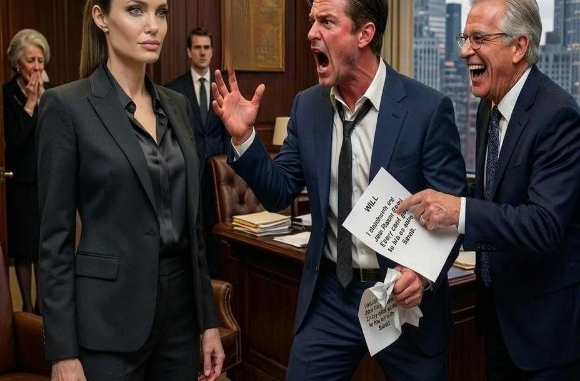
A month later, the family lawyer summoned Nathan for final trust activation. I was there too. Nathan arrived confident, smiling. Leonard Graves opened the file, glanced at me, and laughed.
“Excuse me?” Nathan said.
“Did you actually read your father’s will carefully?” Leonard asked.
Nathan turned pale.
The fortune he had divorced me for wasn’t a simple windfall. The trust was structured with staggered distributions, oversight, spending controls, and behavioral conditions—especially if he tried to manipulate assets through divorce. His access would be suspended if trustees determined the divorce was motivated by inheritance rather than misconduct.
Nathan shot to his feet. “She gets nothing!”
“She earned it,” Leonard said calmly, looking at me.
Letters, memos, medical notes, and preserved texts documented my care of Charles and the estate while Nathan drifted. Filing for divorce seventeen days after the funeral sealed his fate.
The trustees limited Nathan to a monthly allowance, controlled all major assets, and monitored spending. Meanwhile, I received a one-time distribution and the lake house, free of his control.
Nathan’s arrogance had trapped him. He had enough to stay visible, but every impulsive move now came at a cost.
Months later, he tried outrage, charm, and manipulation. Nothing worked. His attempts to undo the trust only reinforced Charles’s foresight.
I watched him show up at the lake house, staring at the windows like he once assumed would always welcome him.
“You enjoy this?” he asked.
“No,” I said. “I enjoy peace. This is just the road you took to get me here.”
“He always liked you more,” he said.
“He respected me more,” I replied.
He looked away first. For the first time during our marriage, he lost.
I stepped inside, warm tea in hand, house quiet. Real justice doesn’t always shout. Sometimes it quietly proves the truth: those who underestimated you reveal themselves, and dignity is the inheritance no one can take.
Leave a Reply