A Quiet Spring on Maple Grove Lane
Spring arrived gently in the Seattle suburbs, bringing soft rain and pale pink cherry blossoms drifting through the air like confetti.
Maple Grove Lane looked like the perfect picture of a quiet, safe neighborhood—children riding bikes on damp sidewalks, dogs barking lazily behind white picket fences, and neighbors exchanging friendly waves as they collected their morning papers.
Everything seemed calm.
Everything seemed normal.
Nothing about those tidy homes hinted that something dark might be hidden behind their doors.
Sarah Johnson believed that too.
For twelve years, she had lived in a pale-blue house at the end of the street with her husband, Michael, and their daughter, Emma. It wasn’t large, but it was full of warmth—family photos on the walls, Emma’s drawings taped to the fridge, and the quiet comfort of a life that once felt stable and safe.
That Tuesday morning began like any other.
The Subtle Signs People Miss
In the kitchen, Sarah, dressed in pale-green hospital scrubs, flipped toast while the coffee maker hummed beside her. Outside, a light drizzle blurred the world into soft shades of gray and pink.
Her mind wandered to Emma’s math presentation. The night before, Emma had practiced for hours, standing beside the couch like it was a classroom podium, carefully explaining fractions with surprising seriousness.
“Mom, what if I forget everything?”
Sarah turned as her ten-year-old hurried down the stairs, one sock missing, uniform half-buttoned, and backpack slipping off her shoulder.
Emma had golden curls that bounced when she moved and curious hazel eyes that always seemed full of questions. Teachers called her bright. Sarah simply saw her as everything.
“You won’t forget,” Sarah said gently, placing toast in front of her. “You practiced more than enough.”
Emma smiled faintly but only picked at her food.
Sarah noticed.
Lately, Emma had been eating less, complaining of headaches and fatigue. At first, Sarah blamed school stress—but the concern lingered quietly in the back of her mind.
The Empty Seat
“Did Dad already leave?” Emma asked, glancing at the empty chair.
“Yes. Early meeting,” Sarah replied.
Emma nodded silently.
There had been a time when Michael sat there every morning, reading the paper while Emma shared stories about school. He used to toss grapes across the table just to make her laugh.
Those mornings had faded.
Now he left before sunrise and returned long after Emma was asleep.
Work, he said.
Sarah wanted to believe him.
But lately, belief felt heavier.
The Drive to School
The ride to Madison Elementary was only ten minutes, but it felt longer in silence.
Usually, Emma filled the car with chatter—stories about friends, books, and playground drama. Today, she just stared out the window.
“Are you okay?” Sarah asked softly.
“I’m just tired.”
Her voice lacked its usual spark.
When they arrived, Emma gave her mother a quick hug before heading inside.
“I’ll see you later, Mom.”
Sarah watched her walk through the doors, a quiet unease settling in her chest. Something was changing—she just didn’t know how.
A Nurse Who Thought She’d Seen It All
Sarah worked at St. Mary’s Hospital, a pediatric nurse for nearly eight years. She was known for her calm demeanor and steady hands—qualities that reassured frightened parents.
She had seen everything: broken bones, pneumonia, accidents, even cancer.
Working with sick children teaches you one thing quickly—life is fragile.
Still, Sarah had always believed her own family was somehow outside that reality.
That illusion shattered at 1:17 PM.
The Call No Parent Wants
While adjusting an IV, Sarah felt her phone vibrate. She normally ignored personal calls at work—but this one was from Madison Elementary.
A chill ran through her.
“Mrs. Johnson?”
“Yes.”
“This is the school nurse. Your daughter collapsed in class.”
The hallway seemed to tilt.
“She’s conscious, but very unwell. She needs to go to the hospital immediately.”
Sarah barely remembered hanging up.
She only remembered running.
Racing Against Time
Ten minutes later, Sarah burst into the nurse’s office.
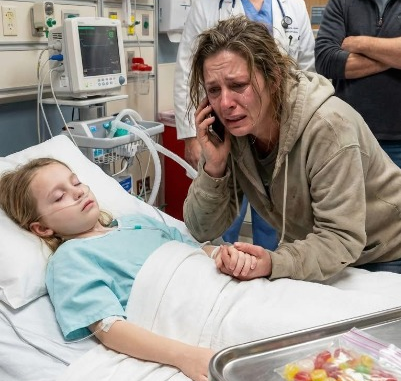
Emma lay pale on a small cot. Too pale.
“Mom…” she whispered weakly.
“I’m here,” Sarah said, lifting her carefully. Emma felt frighteningly light.
The drive back to the hospital felt endless—every second stretched thin with fear.
“Stay with me,” Sarah whispered.
“I’m tired.”
“Don’t fall asleep.”
A Shocking Discovery
In the emergency room, everything moved fast—voices, monitors, commands.
“Low blood pressure.”
“Irregular pulse.”
“Start an IV.”
Sounds Sarah was used to suddenly felt terrifying.
An hour later, Dr. Martinez approached, his expression grave.
“We found something unusual in her blood,” he said.
Sarah’s heart pounded.
“Traces of a toxic substance… it appears to be arsenic.”
“Poison?” she whispered.
He nodded.
“And based on the levels, she’s been exposed multiple times over several weeks.”
The ground seemed to vanish beneath her.
The Investigation Begins
Soon after, a detective entered the room.
“Detective Laura Brown,” she said. “We need to ask a few questions.”
Sarah felt a cold wave wash over her.
“Has Emma been around anyone new?”
“No,” Sarah said slowly.
Then Emma stirred.
“Mom… Dad’s friend… the lady…”
The room went still.
“What lady?” Sarah asked.
“She gave me cookies.”
The detective looked up sharply.
“When did you meet her?”
Emma blinked. “Dad introduced us.”
The First Crack
Sarah turned slowly toward Michael.
His face had gone pale.
Even before he spoke, something inside her shifted—like the first fracture in a life she thought she understood.
“The nice lady… brown hair…” Emma murmured.
“Do you remember her name?” the detective asked.
“Maybe… Anna?”
Sarah’s eyes locked onto her husband.
He said nothing—but she knew him well enough to read the silence.
This one felt different.
This one felt dangerous.
“Michael,” she said quietly.
“I don’t know who she means,” he replied too quickly.
The detective watched him closely.
“Any coworkers named Anna?”
“No.”
“She came to the house,” Emma whispered.
Sarah froze.
“You brought someone into our home?”
“It wasn’t like that,” Michael said.
“What wasn’t like that?” the detective pressed.
He hesitated—just for a moment.
“Anna Keller,” he finally admitted.
The name landed heavily in the room.
“She came twice,” Emma added softly. “The second time she brought cookies.”
Sarah’s stomach twisted.
“You never told me,” she said.
“I didn’t think it mattered.”
The words stung.
“Work doesn’t bake cookies for my child,” she said bitterly.
A Breaking Point
Emma was later moved to intensive care as doctors began treatment.
That evening, rain fell steadily outside the hospital window.
Sarah sat beside her daughter, holding her hand.
Michael stood across the room.
Silence stretched between them.
Finally, Sarah spoke.
“How long have you known her?”
“A few months,” he admitted.
“A few months,” she repeated.
“And you thought it was normal to bring her into our home?”
“It was work.”
Sarah let out a hollow laugh.
“Are you sleeping with her?”
The question hung in the air.
Michael hesitated.
And that hesitation told her everything.
Sarah turned away, feeling something inside her finally break.
For years, she had watched stories like this unfold in hospital waiting rooms and police reports—affairs, secrets, betrayal. She had always believed those kinds of tragedies happened to other families, never her own.
But now everything was shifting.
The late nights.
The early mornings.
The emotional distance.
And now, a woman named Anna Keller baking cookies for Emma.
Sarah felt nauseous.
“Does she know about me?” she asked quietly.
Michael gave a small nod. “Yes.”
“And Emma?”
“Yes.”
Sarah shut her eyes.
“And she still came into my house.”
Neither of them spoke after that.
The next morning, Detective Brown returned, looking tired and carrying a folder.
“I spoke with Ms. Keller,” she said.
Michael straightened immediately. “And?”
“She denies harming your daughter.”
Sarah looked up sharply. “What else would she say?”
The detective nodded. “She did confirm visiting your home twice—and that Mr. Johnson introduced her to Emma as a friend.”
“A friend,” Sarah repeated bitterly.
Emma stirred weakly. “Mom?”
“I’m here,” Sarah said softly, leaning in.
“Why is everyone upset?”
“You just need to rest,” Sarah whispered, kissing her forehead.
But the detective stepped closer. “Emma, do you remember the cookies she gave you?”
Emma nodded faintly. “Chocolate.”
“Did anyone else have any?”
Emma shook her head. “She said they were just for me.”
The words hit Sarah like a blow.
“Just for you,” the detective repeated.
Emma drifted back to sleep.
“Did you see the cookies?” the detective asked.
“No,” Sarah said.
“Neither did I,” Michael added quietly.
“Were they left in the house?”
“I guess Emma ate them,” Michael said.
Sarah turned sharply. “You don’t even know?”
He said nothing.
The detective closed her folder.
“I’ll be honest—right now, Anna Keller is the only person directly linked to the poisoning.”
Sarah’s heart pounded. “But?”
“But cases like this are rarely simple.”
“What does that mean?”
“It means motive matters.”
“What motive could she have?” Sarah demanded.
The detective hesitated. “In situations involving affairs… children can sometimes be seen as obstacles.”
The word landed heavily.
“You think she wanted my daughter gone?”
“I’m saying it’s one possibility.”
Michael stood abruptly. “That’s insane!”
The detective met his gaze calmly. “Is it?”
“She wouldn’t do that.”
Sarah turned to him slowly. “You sound very sure.”
He froze.
“You barely know her,” she added.
He didn’t respond.
“Unless you know her better than you’re admitting.”
The detective spoke again. “There’s something else.”
Both looked up.
“We found messages between you and Ms. Keller.”
Michael’s face drained of color.
“They discussed your marriage,” the detective continued. “In one message, she wrote: ‘If Emma wasn’t in the picture, things would be easier.’”
Silence filled the room.
Sarah stared at Michael—but what frightened her most wasn’t the message.
It was his expression.
He looked like a man who had already seen those words—and done nothing.
“You knew,” Sarah said quietly.
It wasn’t a question.
“I saw it,” Michael admitted quickly, “but it wasn’t meant like that.”
Sarah let out a brittle laugh. “Then explain it.”
“She didn’t mean it literally.”
“Oh?” the detective raised an eyebrow.
“She meant our relationship was complicated because I have a family.”
“You told her we were a problem?” Sarah asked.
“I didn’t say that.”
“You didn’t have to.”
The detective stepped in. “How long has the relationship been romantic?”
“About three months,” Michael admitted.
Sarah closed her eyes.
Three months—since the late nights began, since the distance, since Emma started asking why her father missed dinner.
“When did she meet Emma?”
“A month ago.”
“And why introduce them?”
“She was helping me with work.”
“At your house,” the detective said flatly.
“Yes.”
“You didn’t think that was a problem?”
Sarah snapped, “You didn’t think bringing your mistress into our home was a problem?”
Michael flinched. “I wasn’t going to tell Emma.”
“How thoughtful,” Sarah said coldly.
The detective refocused. “After that message, how did you respond?”
“I said Emma is my daughter and nothing would change that.”
“And then?”
“She said she understood… that she wouldn’t make me choose.”
“Clearly she changed her mind,” Sarah muttered.
“Did she ever show resentment toward Emma?”
“No.”
“You’re lying,” Sarah said.
“I’m not.”
“Then explain the message.”
He couldn’t.
Later, Sarah sat alone in the waiting area. Detective Brown joined her.
“You don’t think Anna did it,” Sarah said quietly.
The detective tilted her head. “What makes you say that?”
“You’re choosing your words carefully.”
A faint smile. “You’re observant.”
“So what aren’t you saying?”
“Poison cases are deliberate,” the detective said. “They’re planned.”
Sarah’s stomach tightened. “So this was intentional.”
“Very likely.”
“But why Emma?”
“That’s what we’re trying to understand.”
She paused. “We found something else.”
Sarah’s pulse quickened. “What?”
“Your husband recently increased Emma’s life insurance policy.”
Sarah blinked. “What?”
“Two months ago. He’s the sole beneficiary.”
“How much?”
“Five hundred thousand dollars.”
The number echoed in her mind.
Half a million.
“That has to be a coincidence,” she whispered.
The detective didn’t respond.
Sarah’s thoughts spiraled—an affair, a mistress, poisoned cookies, insurance money.
“I think… I don’t know who my husband is anymore,” she said quietly.
Outside, Michael stood in the parking lot on the phone.
“Anna, I didn’t tell them anything,” he said urgently.
“They came to my apartment,” Anna replied, shaken. “They think I poisoned her.”
“You didn’t… did you?”
“Of course not!”
He exhaled—but her next words stopped him cold.
“I didn’t bake those cookies. I bought them.”
“What?”
“I brought them, yes—but I didn’t poison them.”
Michael’s chest tightened.
“Did you leave them unattended?”
“…For a few minutes.”
“When?”
“While we were in your office.”
A chill ran through him.
Someone else had been in the house.
Someone who could’ve touched the cookies.
Someone no one had considered.
That night, the hospital was quiet except for machines and distant footsteps.
“Five hundred thousand dollars,” Sarah said suddenly.
Michael looked up.
“The insurance policy.”
“It was just financial planning,” he said.
“On a child?” she snapped.
“I was thinking about her future.”
“Or yours?”
“This is insane,” he shot back.
“You expect me not to question you?”
“I didn’t poison Emma!”
“Then who did?”
He had no answer.
The next morning, Detective Brown returned with evidence.
She placed a sealed container on the table.
Sarah’s breath caught. “The cookies.”
“We found two in the trash,” the detective said. “They tested positive for arsenic.”
“So Anna did it,” Sarah said.
“Not exactly,” the detective replied.
“The poison wasn’t baked in—it was added afterward.”
Silence.
“Sprinkled on top,” she clarified.
Michael’s pulse raced. “After they were in the house?”
“Yes.”
Sarah’s voice shook. “Then Anna didn’t do it.”
“Correct,” the detective said.
Relief flickered—then vanished.
“Which means the poison was added inside your home.”
The words landed heavily.
Inside the house.
Only three people had access.
Emma.
Michael.
Or Sarah.
“You think I did this?” Sarah whispered.
“I’m considering opportunity,” the detective said calmly.
Sarah turned to Michael.
For the first time, she saw doubt in his eyes.
And that hurt more than anything.
Later, in the hallway, the detective questioned Michael again.
“While Anna stepped away, where were you?”
“In the office with her.”
“So no one was in the kitchen?”
Michael paused.
Then something clicked.
His stomach dropped.
“There was someone else.”
The detective’s eyes sharpened. “Who?”
Michael swallowed.
“My mother.”
The cookies.
The poison.
The affair.
The insurance policy.
None of it added up.
Then the door opened.
Detective Brown stepped back into the room, her expression more serious this time—sharper, more intent.
“Mrs. Johnson,” she said calmly, “I need to ask you about Michael’s mother.”
Sarah looked up. “Margaret?”
“Yes.”
“What about her?”
“Was she at your house yesterday afternoon?”
Sarah paused, thinking. “Yes… she stopped by.”
“How long was she there?”
“Not long. Maybe fifteen minutes.”
“Did she go into the kitchen?”
“Yes. She said she wanted tea.”
The detective’s gaze narrowed slightly. “Did she touch the cookies?”
Sarah’s breath caught. “I… I think she moved them.”
“Moved them?”
“They were near the edge of the counter. She said it wasn’t safe.”
Sarah’s pulse quickened. “Wait… you think Margaret—”
The detective gently raised a hand. “I’m not accusing anyone yet.”
But Sarah already felt the shift.
A memory surfaced—Margaret standing in the kitchen, watching Emma. Not smiling. Not warm. Just watching.
Margaret had never truly liked Emma.
Once, she had said something Sarah never forgot:
“Children complicate everything.”
Sarah’s heart began to race.
“Detective…”
“Yes?”
“There’s something you should know.”
The detective leaned closer. “What is it?”
“Margaret hates me,” Sarah said, her voice unsteady.
“That’s not unusual for in-laws.”
“No,” Sarah shook her head. “You don’t understand.”
She glanced at Emma, then back.
“She believes Michael should have married someone else.”
“Anna Keller?”
Sarah nodded.
The detective’s eyes widened slightly. “She knows Anna?”
“Yes.”
“How?”
Sarah swallowed. “Because… she’s the one who introduced them.”
The room went still.
“You’re saying Michael’s mother arranged the affair?”
“Yes.”
“And she sees Emma as standing in the way?”
Sarah felt a cold certainty settle in. “Yes.”
Just then, the detective’s phone buzzed. She checked it—and her expression shifted instantly.
“What is it?” Sarah asked.
“We just received the toxicology report,” the detective said.
“And?”
“The arsenic came from a rat poison brand sold at a specific hardware store.”
Sarah’s heart pounded. “Why does that matter?”
“Because we checked the purchase records.”
The room seemed to tilt.
“And the buyer?”
The detective closed the folder quietly.
“Margaret Johnson.”
By the time Detective Brown stepped outside, the rain had stopped. Morning light reflected off the wet pavement.
Inside, Sarah sat beside Emma’s bed, holding her hand. The machines beeped softly.
Emma hadn’t woken yet—but the doctors said she would. The arsenic levels were dropping. She was going to survive.
That was all that mattered.
The door opened. Michael stepped inside, looking exhausted.
“Detective Brown called,” he said.
“I know,” Sarah replied without looking at him.
“She thinks my mother did it.”
Sarah finally met his eyes. “What do you think?”
He hesitated. “I think… I don’t recognize my own family anymore.”
There was honesty in his voice—but it changed nothing.
“Your mother hated me,” Sarah said quietly.
“She never liked anyone I dated.”
“That’s not the same thing.”
He didn’t argue.
Because he knew she was right.
Margaret had always been cold toward Emma—polite in public, distant in private.
Sarah remembered something Margaret once whispered:
“Children trap men.”
Back then, it seemed bitter.
Now, it sounded like motive.
The door opened again. Detective Brown entered.
“Mr. Johnson,” she said.
Michael turned. “Yes?”
“We found your mother.”
Sarah’s heart jumped. “Where?”
“At her house.”
Michael frowned. “Of course she’s there.”
“She wasn’t expecting us,” the detective said.
His stomach tightened. “What happened?”
“We questioned her about the rat poison.”
“And?” Sarah asked.
“She denied it at first.”
Michael sighed. “That sounds like her.”
“But then we showed her security footage.”
“She bought it,” Sarah whispered.
“Yes.”
Michael shook his head. “There has to be an explanation.”
“She admitted buying it,” the detective said.
Silence filled the room.
“But she claims it wasn’t meant for Emma.”
Sarah’s grip tightened. “Then who?”
The detective looked at Michael.
“You.”
Michael felt the ground drop beneath him. “What?”
“She says she intended to poison you.”
“That’s insane,” he said, his voice shaking.
“She believed Anna Keller was manipulating you,” the detective explained. “She thought killing you would stop it.”
Sarah stared in disbelief. “So she tried to kill her own son?”
“That’s what she claims.”
Michael’s mind raced. “How?”
“She planned to poison a drink in your office while Anna was visiting.”
“The kitchen…” Sarah whispered.
The detective nodded.
Michael’s memory snapped into place—Anna in the office, his mother in the kitchen, the cookies on the counter.
“But Emma ate them,” he said.
“Yes,” the detective replied.
A wave of horror washed over Sarah.
“So Emma was never the target.”
“No.”
Michael’s voice broke. “My mother almost killed my daughter trying to kill me.”
The detective closed her folder. “That appears to be the case.”
No one spoke.
The truth was too heavy.
Too twisted.
Too devastating.
“Why?” Sarah finally whispered.
“She believed she was ‘saving the family,’” the detective said quietly.
Sarah let out a hollow laugh. “By destroying it?”
The detective gave a small shrug. “People convince themselves of anything.”
Michael sank into a chair. “My mother is insane.”
Sarah looked at him. “Your mother almost killed our child.”
He didn’t argue.
There was nothing left to say.
Three days later, Emma woke up.
The doctors called it a miracle.
Sarah called it survival.
“Mom?” Emma whispered.
“I’m here,” Sarah said, tears streaming down her face.
“Why am I in the hospital?”
“You ate something that made you very sick.”
“The cookies?”
“Yes.”
Emma frowned. “Were they bad?”
Sarah hesitated—then nodded. “Yes.”
Emma accepted it simply, then drifted back to sleep.
Sarah held her hand and cried quietly.
Margaret Johnson was arrested two days later, charged with attempted murder and related offenses.
She repeated the same claim over and over:
“I was protecting my son.”
No one believed her.
Except herself.
And that was the most frightening part.
A week later, Michael moved out. Divorce papers followed soon after.
Some damage couldn’t be undone.
Some trust never came back.
Michael still saw Emma—carefully, under supervision.
Sometimes he tried.
Sometimes he failed.
But Sarah no longer built her life around him.
She built it around Emma.
Around healing.
Around peace.
Six months later, they sat in a park on a warm afternoon.
Emma ran ahead, laughing as she chased pigeons across the grass.
Alive.
Healthy.
Free.
Sarah watched from a bench, finally feeling the weight lift.
“Mom?” Emma asked, climbing beside her.
“Yes?”
“Why did those cookies make me sick?”
Sarah looked at her, then smiled softly.
“Because sometimes people make very bad choices.”
Emma nodded, satisfied, and ran off again.
Sarah watched her go.
And for the first time in months—
she could finally breathe.
Because while the truth had poisoned everything…
love had survived.
Leave a Reply